
Research in the real world
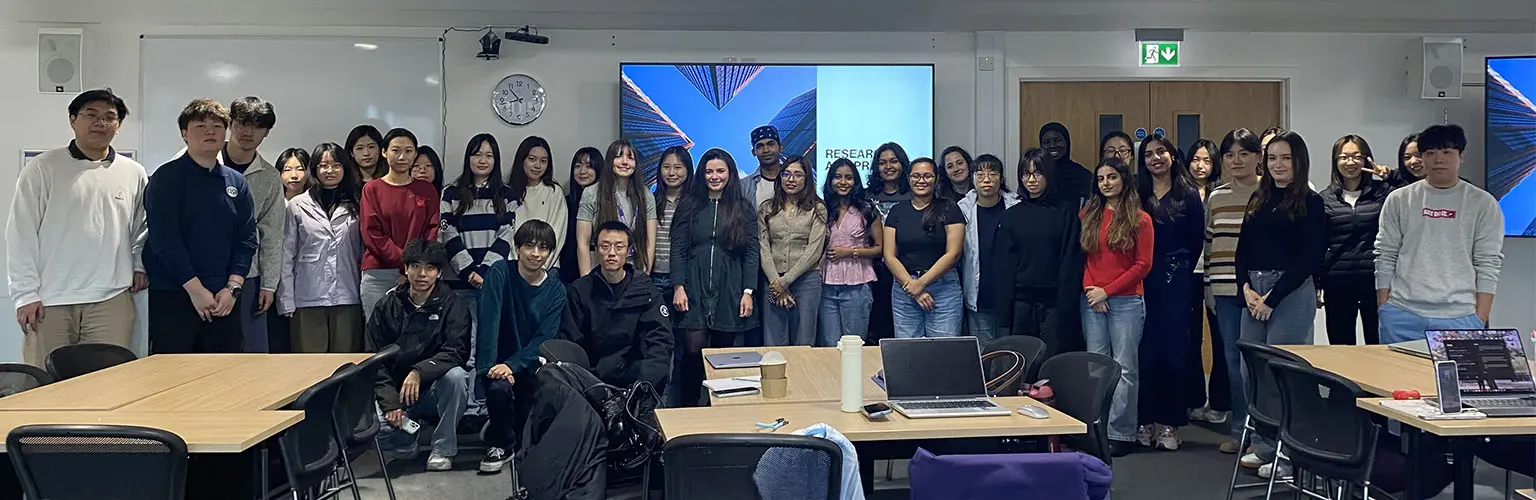
Students on our Human Resource Management course recently welcomed Malika Saggers, People and Culture Lead at Constructive Thinking Studio, for a guest lecture exploring how research and academic skills can be applied in the workplace and what employers look for in graduates entering HR.
When Malika joined Constructive Thinking Studio as their People and Culture Lead, the fast-pace and successful growth of the organisation had brought new challenges around structure. Rather than relying on instinct alone, she turned to research to help her tackle these challenges. Drawing on research into change management and organisational design, Malika used that evidence to help develop an organisation structure which will provide greater role clarity for the current team and support the organisation’s future growth.
It’s a practical example of something Malika believes is increasingly important for anyone starting a career in HR: having knowledge is one thing but knowing how to apply that knowledge is what can really make you stand out.
What employers are looking for
For Malika, one of the ways graduates can stand out is by showing employers how they would take the skills developed throughout their degree and apply them to real workplace challenges.
Critical thinking, research, and analytical reading and writing all have value beyond university. What matters is being able to use those skills to understand a problem, assess the information available and think through what an appropriate response might look like in a particular organisation.
While graduates often enter the workplace with a strong academic foundation, Malika highlighted that this is only part of what employers are looking for.
She explained, "[graduates] arrive with a vast amount of technical knowledge, but I think one of the biggest gaps is around skills of application and behaviours to influence and impact decision makers.”
So how can students bridge that gap?
Research and evidence-based decision-making are one way students can demonstrate this. Malika explained that HR professionals need to be able to look beyond one source of information when making decisions about people and organisations.
An employee engagement survey, for example, can provide useful insight, but should not necessarily be the only evidence informing a decision. Combining quantitative information with qualitative insight methods can provide a fuller picture before deciding how to respond.
For Malika, this ability to question, investigate and draw on different sources of evidence is a good example of how skills developed at university can translate into workplace decision-making.
Standing out as a graduate
Alongside research and critical thinking, gaining practical experience can help students develop the skills and behaviours employers are looking for. This does not necessarily have to mean securing a formal paid role in HR. Malika suggested that volunteering and internships can also provide opportunities to experience the workplace and put skills into practice.
She also encouraged students to develop a “growth mindset”, looking beyond one particular job or industry and thinking more broadly about the skills they have gained, where those skills could take them and how they can continue developing after graduation.
That mindset can also help when approaching the recruitment process. Taking the time to understand an organisation, its direction and the challenges it faces gives graduates the opportunity to arrive at an interview with informed ideas of their own and demonstrate how they could contribute, rather than simply explaining why they want the job.
For Malika, standing out ultimately comes back to showing employers what you can do with what you have learnt: “How you can stand out in a job interview is really showing that you’ve not just taken information at face value, but you’ve thought about where you can take that information and apply it in different scenarios that might make a difference.”
For students preparing for a career in HR, being able to connect academic knowledge with real organisational challenges is what turns theory into something valuable in practice.
That link between research, critical thinking, and practical application is reflected in the new MSc Human Resource Management and Employment Relations course at Alliance Manchester Business School. Students explore contemporary people management and employment relations theories while benefiting from opportunities to apply their learning to organisational challenges, including presenting solutions to real industry case studies at the annual HRM Conference.
Interested in building your career in HR? Explore MSc Human Resource Management and Employment Relations >>