

The Annual Teddy Chester Lecture
This year's Teddy Chester Lecture will be delivered by Professor Mary Dixon-Woods, Director of THIS Institute.
- Event Time
- 9 Nov 18:00 - 9 Nov 19:00
- Event Location
- Alliance Manchester Business School
- Event Type
- Healthcare management, Online, Original Thinking Applied
In this lecture, Professor Mary Dixon-Woods will focus on the complexities and hardships of managing the NHS and what solutions and improvements could be made.
Why is it so hard to manage the NHS?
Expected to deliver universal, safe, timely, equitable, compassionate, efficient and innovative care amid intense financial, workload and demand pressures, and under sustained public scrutiny and political exposure, the NHS is exceptionally difficult to manage.
Attempts to manage from the top characteristically run into the messy realities of work at the sharp end of care, not to mention a highly complex ecology of organisations, professions, estates, path dependencies, and local circumstances.
Attempts to manage entirely from the bottom up bring their own risks: duplication, localism, inequity, weak accountability and waste. The challenge is compounded by the fact that the NHS must act through institutional machinery that is both necessary and constraining.
The legal, regulatory and normative environments in which it operates profoundly shape what kinds of managerial action are possible, at what speed, and with what impact.
Procurement rules, contracting arrangements, employment law, professional regulation, information governance, policy directives, financial incentives, public law duties and regulatory regimes all exist for good reasons.
But they also mean that apparently simple managerial tasks – recruiting and retaining the right people, redesigning roles, addressing harmful behaviour, buying equipment, changing a pathway, sharing data, or stopping ineffective practices – can be frustrating, transactionally costly, risky, and prone to failure.
These are all long-standing problems that have proven remarkably difficult to shift. If we can avoid the naïve optimism that another reorganisation will save us, or that pulling harder on the same old levers of rules and incentives will be enough, there is hope.
That hope is practical, disciplined and evidence-based: it lies in taking management seriously as a capability. Better management, better managers and better operational systems are not peripheral to improving care for patients; they are the conditions that make improvement possible.
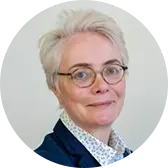
Professor Mary Dixon-Woods
Mary Dixon-Woods is Director of THIS Institute and the Health Foundation Professor of Healthcare Improvement Studies in the Department of Public Health and Primary Care at the University of Cambridge. Mary is also a fellow of the Academy of Social Sciences and the Academy of Medical Sciences, an honorary fellow of the Royal College of Physicians, the Royal College of General Practitioners, and the Royal College of Obstetricians and Gynaecologists. She was an NIHR Senior Investigator 2017-2022.
Mary served on England’s National Advisory Group on the Safety of Patients in England, which produced the Berwick report in 2013. She also served on the review of information technology in the NHS led by Professor Bob Wachter, which reported in 2016.
She was a Wellcome Trust Senior Investigator 2012-2019. Mary was the Harveian Orator for the Royal College of Physicians in 2018, the 500th anniversary of the College’s founding. She is a member of the BMJ’s international advisory board.
Teddy Chester Lecture
This annual lecture marks the contribution of Teddy Chester, who was the first professor of social administration at The University of Manchester.
From his appointment in the early 1950s, to his retirement in the 1970s he was an influential pioneer in management development, using evidence and research with policy makers, and working with clinical leaders. He was involved in founding and leading the NHS Graduate Training Scheme, and in founding Manchester Business School.
There will be refreshments served from 5:30pm with the opportunity for networking before the lecture for those attending in person at Alliance MBS.